
In the pursuit of building muscle, understanding optimal volume and training frequency is only half the battle. To force continuous, long-term muscular adaptation, your training must be governed by the principle of Progressive Overload. Without it, your body simply maintains its current state of homeostasis, and muscle growth stalls completely.
1. The Biological Mandate: General Adaptation Syndrome (GAS)
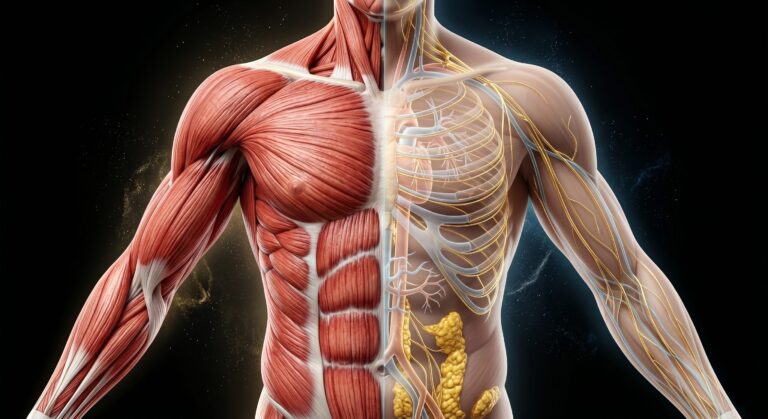
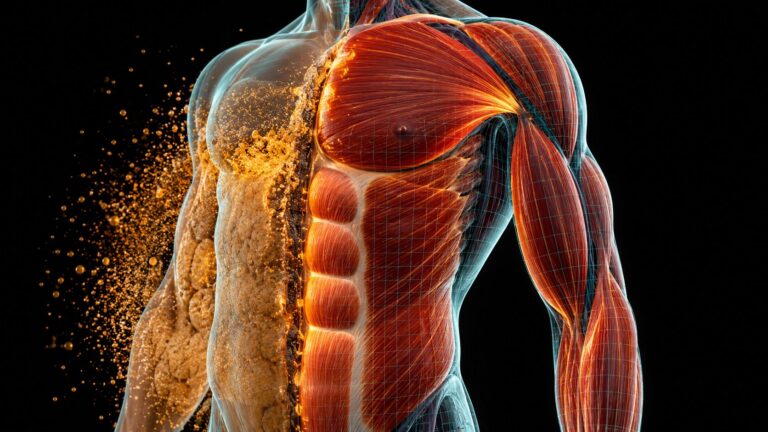
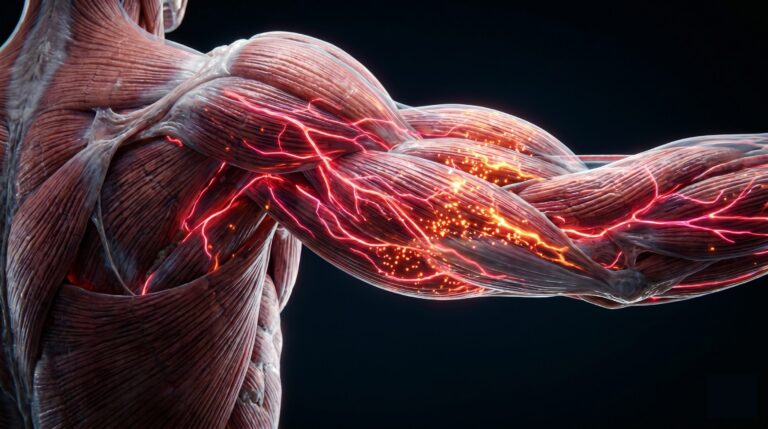
To understand why progressive overload is non-negotiable, we must look at the General Adaptation Syndrome (GAS). When you lift weights, you introduce a mechanical and metabolic stress that your body views as a threat to survival. In response, it repairs the damaged muscle fibers to be larger and stronger than before, ensuring that the same stress will not cause damage in the future.
However, this creates a paradox: as you get stronger, the workout that previously caused growth now barely maintains your current muscle mass. To trigger another cycle of adaptation, the stimulus must become increasingly difficult. This is the essence of progressive overloadKraemer et al..
2. The Four Pathways of Progression (Beyond Just Adding Weight)
A common mistake in the gym is believing that progressive overload strictly means adding more weight to the bar (Load Progression). While load is a primary driver, attempting to add 5 lbs every single week quickly leads to joint pain, form breakdown, and central nervous system burnout. Exercise science recognizes four distinct pathways to force muscle growth.
| Pathway of Progression | Definition & Execution | Best Used For |
|---|---|---|
| Load (Intensity) | Increasing the physical weight lifted (e.g., jumping from 100 lbs to 105 lbs). | Compound barbell and dumbbell movements (Squats, Deadlifts, Bench Press). |
| Volume (Repetitions) | Performing more repetitions with the exact same weight (e.g., 8 reps last week, 9 reps this week). | Isolation exercises where adding weight is difficult (Lateral Raises, Bicep Curls). |
| Density (Rest Periods) | Completing the exact same workload (weight and reps) but with less rest time between sets. | Metabolic stress phases, cutting phases, and improving muscular endurance. |
| Execution (Form/Tempo) | Lifting the same weight and reps, but with a slower eccentric phase or deeper range of motion. | Breaking through plateaus without increasing joint strain. Highly anabolic. |
3. The Double Progression Model: The Gold Standard
The most scientifically sound and practical framework for applying these pathways is the Double Progression Model. Instead of blindly forcing more weight onto the bar, this model focuses on maximizing your repetition range first, and only increasing the load once that range is masteredHelms et al..
💡 How Double Progression Works in Real Life
Let’s say your target rep range for the Overhead Press is 8 to 12 reps, and you are currently using 50 lbs.
- Week 1: You lift 50 lbs for 3 sets of 8 reps. (Your goal now is to increase REPS, not weight).
- Week 2: You lift 50 lbs for 3 sets of 10 reps.
- Week 3: You lift 50 lbs for 3 sets of 12 reps. (You have now hit the top of the rep range!).
- Week 4: NOW you increase the weight to 55 lbs, and your reps will naturally drop back down to about 8. You then start the cycle all over again.
This method ensures your joints and connective tissues are fully prepared for heavier loads, drastically reducing the risk of injury while ensuring continuous hypertrophy.
4. The Role of Deloading in Progression
Progressive overload is not a straight line ascending into infinity. As you continuously increase the intensity, you accumulate systemic fatigue. If fatigue masks your fitness, your performance will drop, and muscle growth will cease. This is known as the Fitness-Fatigue Model.
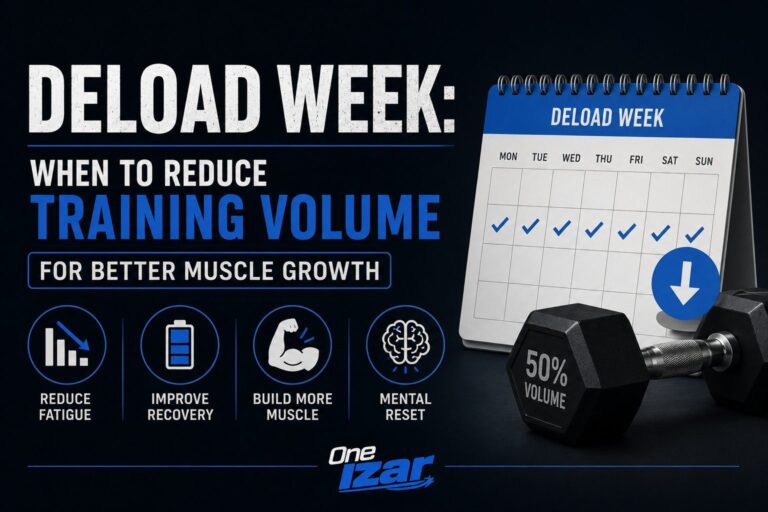
To drop this fatigue and reveal your new muscle gains, you must periodically implement a Deload Week. Typically scheduled every 4 to 8 weeks depending on training experience, a deload involves reducing your total training volume by 40-50% for one week. This allows the central nervous system to recover and micro-tears in connective tissue to fully heal, setting the stage for your next mesocycle of progressive overload. See our full breakdown in the deload week guide.
5. Actionable Summary
- Stop ego-lifting: Do not add weight if your form breaks down. Improving your range of motion with the same weight IS progressive overload.
- Use Double Progression: Set a target rep range (e.g., 8-12). Only increase the weight when you can hit the top number of reps for all of your working sets.
- Log your workouts: You cannot overload what you do not track. Use an app or a physical journal to record every set, weight, and repetition.
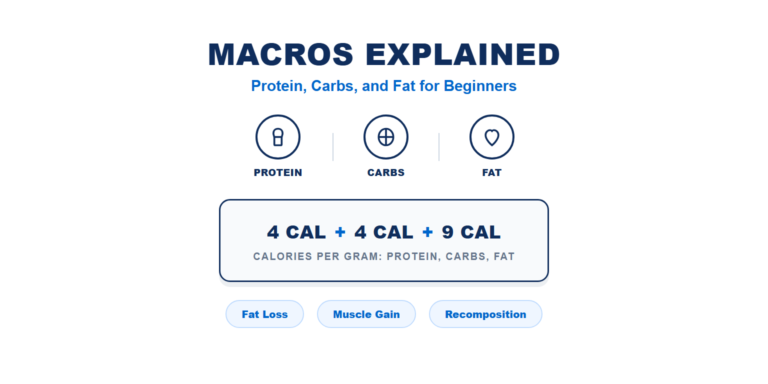
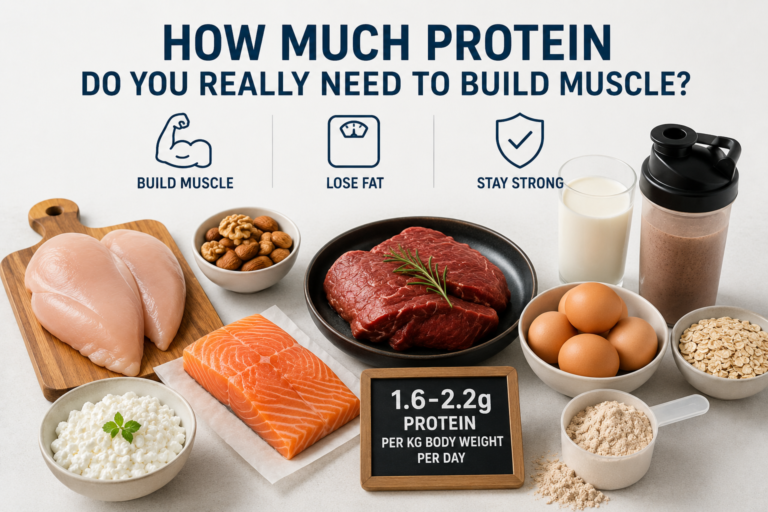
- Fuel the adaptation: New muscle tissue needs a calorie and protein surplus to actually build. Use Oneizar’s free macro calculator to set targets that support your training.
Track Your Progression
Simple gear to log every set and support recovery between sessions
As an Amazon Associate, Oneizar may earn from qualifying purchases at no extra cost to you.