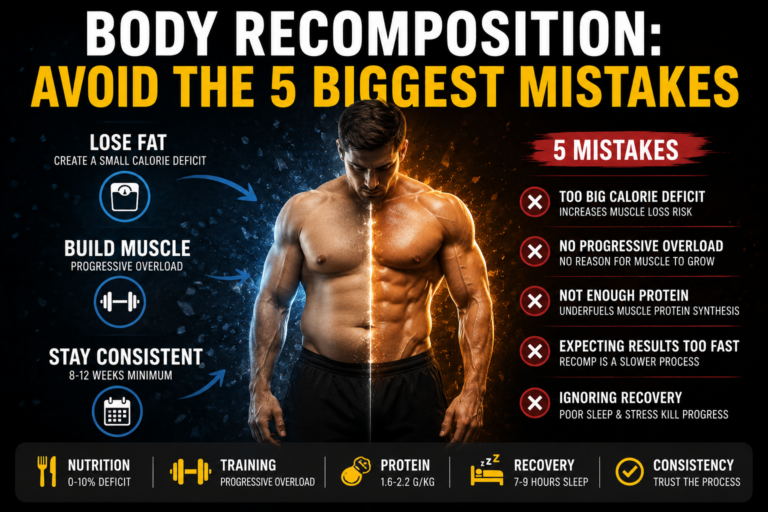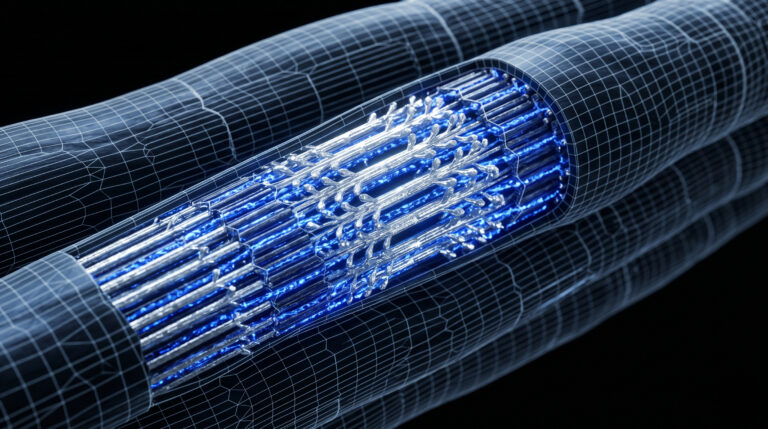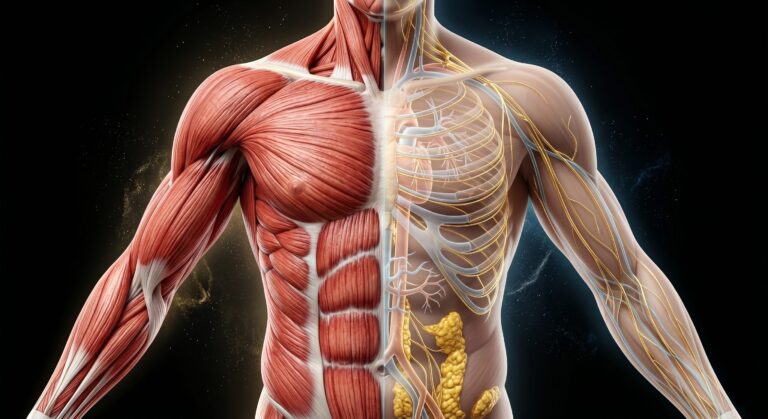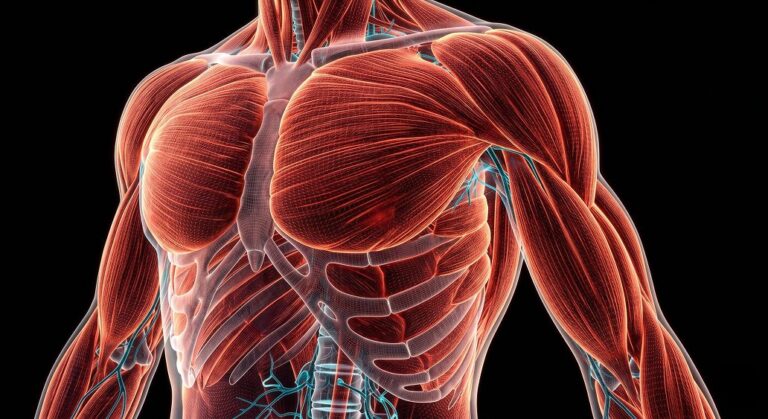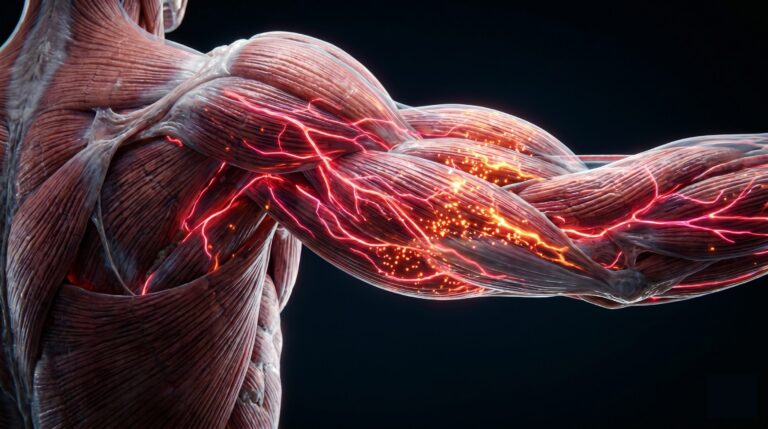

During a body recomposition or “cutting” phase, your primary goal is simple but biologically tricky: you want to burn as much stored adipose tissue as possible while fiercely protecting your hard-earned muscle mass. To achieve this, we have to perfectly manage the delicate balance between your body’s energy intake and its muscle-building signals. If your goal is fat loss and muscle gain together, see our complete body recomposition guide.
1. The Energetic Reality: Fat Oxidation vs. Muscle Breakdown
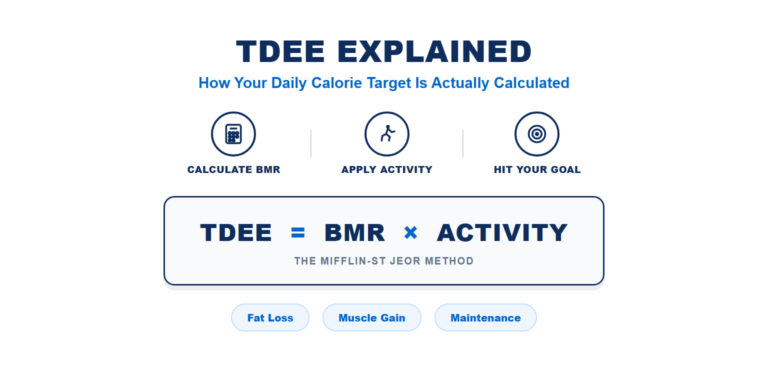
To lose fat, creating a biological energy deficit is non-negotiable. When you eat fewer calories than your body burns, you enter a catabolic state. In this environment, your body mobilizes internal energy stores to survive. You can find your own TDEE baseline in our TDEE and calorie basics guide.
But here is the catch: your body does not inherently care about looking lean or muscular. In fact, it views muscle as a “metabolically expensive” luxury tissue that burns too many calories. If your calorie deficit is too aggressive, your body will panic. It will rapidly shut down protein synthesis and activate the ubiquitin-proteasome system to literally eat your own muscle tissue for fuel. To prevent this muscle wasting, you must dial in your deficit size perfectly — this is also the most common mistake covered in our body recomposition mistakes guide.
2. Quantifying the Deficit: The Inverted Sweet Spot
Many people destroy their muscle mass by jumping into extreme 30-40% calorie cuts, thinking “eat less = lose fat faster.” Exercise science confirms that the rate of fat loss directly dictates muscle retention. A moderate, calculated deficit allows your fat stores to cover the energy gap without forcing the body to tap into lean tissue.
💡 Let’s Break This Down In Simple Terms
Let’s say your body burns exactly 2,500 calories a day (this is your TDEE). If you want to lose fat without losing muscle, your target deficit is 20%.
- 20% of 2,500 is 500 calories.
- 2,500 – 500 = 2,000 calories.
By eating 2,000 calories a day, you force your body to pull those missing 500 calories from your stored fat. Over the course of a week, this translates to about 1 lb (0.5 kg) of pure fat loss. If you try to starve yourself and eat only 1,200 calories, the gap is too large for fat stores to cover quickly enough, and your body will burn muscle to make up the difference. You can calculate your exact numbers with the free macro calculator.
Clinical data shows that a weight loss rate of 0.5% to 1.0% of total body weight per week represents the absolute peak mathematical zone for preserving lean mass while accelerating fat lossGarthe et al..
| Deficit Size | Weekly Weight Loss Rate | Impact on Lean Muscle Mass |
|---|---|---|
| Aggressive (30%+) | > 1.5% of body weight | Severe risk of muscle degradation. Drops energy levels, tanks gym performance, and downregulates thyroid hormones. |
| Optimal (15-20%) | 0.5-1.0% of body weight | Maximum fat tissue mobilization with near-zero muscle loss in resistance-trained subjects. The “Sweet Spot.” |
| Conservative (< 10%) | < 0.3% of body weight | Excellent muscle retention, but fat oxidation rates are very slow, extending the duration of the diet phase unnecessarily. |
3. The Macronutrient Shield: Protein and Anabolic Signaling
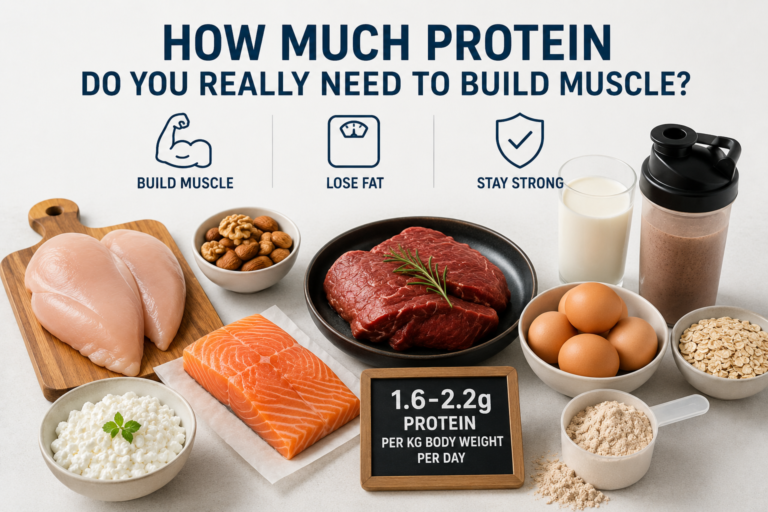
When calories are restricted, your daily requirement for dietary protein actually increases. Protein acts as a direct chemical shield against muscle breakdown through two main mechanisms. See the full breakdown in how much protein you actually need to build muscle:
- Upregulating MPS: High protein intake forces transient spikes in blood amino acid levels (known as hyperaminoacidemia). This constantly re-triggers the mTOR pathway, telling your body to keep synthesizing new muscle proteins despite the overall energy deficit.
- Satiety and TEF: Protein has a Thermic Effect of Food (TEF) of roughly 20-30%. This means that if you eat 100 calories of pure protein, your body burns nearly 30 of those calories just to digest it.
According to comprehensive scientific literature, resistance-trained individuals in a calorie deficit should target a daily protein intake of 1.0 to 1.2 grams per pound of body weight (2.2 to 2.6g/kg). This is slightly higher than a bulking phase and is essential to offset the increased risk of muscle breakdownHelms et al..
The Specific Role of Resistance Training
Nutrition alone cannot save your muscle. Mechanical tension remains the most powerful anti-catabolic signal available to the body. Lifting heavy weights tells your central nervous system that your current muscle volume is absolutely vital for survival. Do not switch to “light weights and high reps” to “tone” the muscle while cutting. Keep lifting heavy to preserve those tension signals — see our progressive overload guide.
4. Summary Action Checklist for Cutting
- Calculate a 20% Calorie Deficit: Find your TDEE and subtract 15-20%. Avoid sudden, extreme starvation diets to prevent metabolic drop-offs.
- Set Protein Targets High: Consume between 1.0 and 1.2 grams of protein per pound of your body weight daily.
- Maintain Lifting Intensity: Keep your working sets between 6-12 reps with heavy loads, stopping 1-2 reps shy of absolute failure.
Need low-calorie, high-protein meal ideas that fit this deficit? Try our Lemon Herb Baked Cod or Asian Cucumber Salad as a side.
Track Your Deficit, Not Just the Scale
Tools to verify your weekly weight loss rate stays in the 0.5-1.0% sweet spot
As an Amazon Associate, Oneizar may earn from qualifying purchases at no extra cost to you.