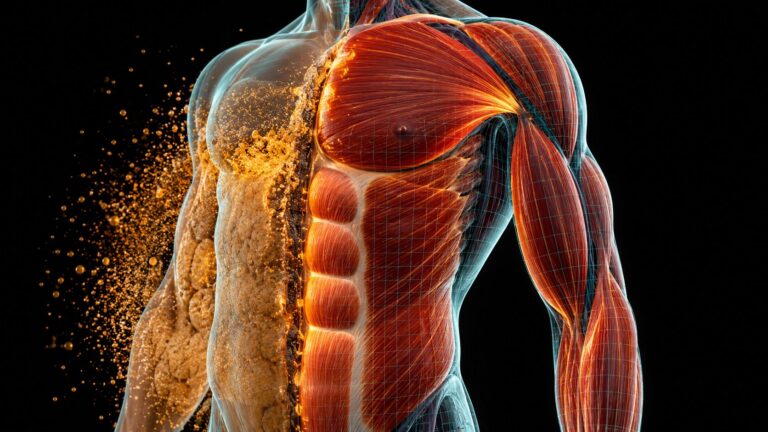

Body recomposition is the process of losing body fat while building or preserving lean muscle mass. The concept is physiologically possible, but most people fail because they create the wrong conditions for adaptation. They diet too aggressively, train without progression, eat too little protein, and expect visible results too quickly. For the full physiological breakdown, see our complete body recomposition guide.
1. The Extreme Deficit Trap
The most common mistake is using a large calorie deficit. While aggressive dieting can reduce scale weight quickly, it also increases the risk of losing lean mass. During body recomposition, the goal is not simply to lose weight. The goal is to create enough energy restriction to reduce fat while still supporting muscle protein synthesis and training performanceLongland.
| Calorie Deficit | Expected Outcome | Recomp Quality |
|---|---|---|
| 0-10% | Slow fat loss with better strength retention | Ideal |
| 15-20% | Faster fat loss but lower training performance | Moderate |
| 25%+ | Higher risk of muscle loss and poor recovery | Poor |
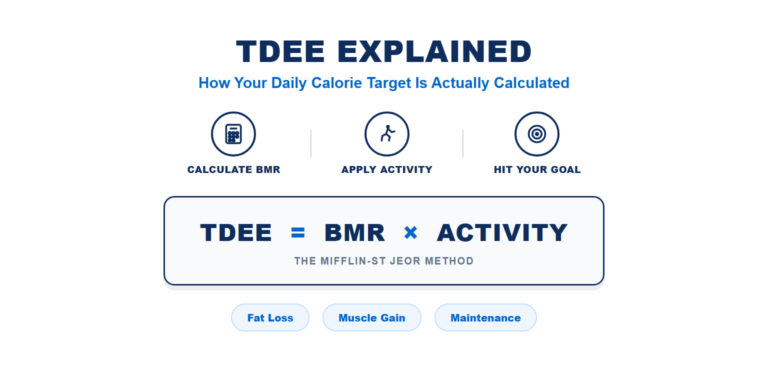
You can calculate your own personal deficit range with the free macro calculator, or read the mechanics behind it in our TDEE and calorie basics guide.
2. No Progressive Overload, No Adaptation
Fat loss is driven mainly by nutrition, but muscle gain requires a training signal. If the body does not experience gradually increasing mechanical demand, it has no reason to build or preserve additional muscle tissue. This is why progressive overload is essential for recomposition.
Progression does not always mean adding more weight every workout. It can also mean performing more repetitions, improving range of motion, increasing total weekly volume, or maintaining better technique under the same loadPlotkin.
💡 Practical Rule
If your strength, reps, or training quality never improve, your body has no strong reason to build new muscle. Recomposition requires both a nutritional environment and a mechanical training signal.
3. Protein Intake Determines the Outcome
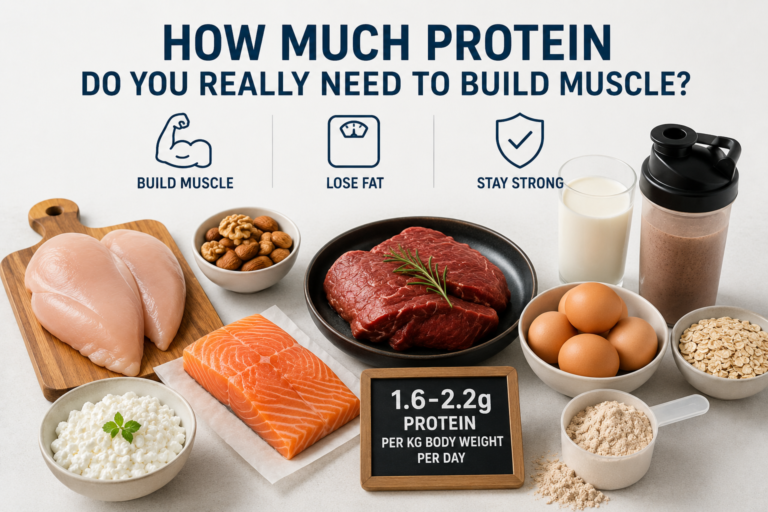
Protein is one of the most important nutritional variables during body recomposition. A higher protein intake supports muscle retention during energy restriction and provides amino acids needed for repair and growth. Research commonly supports a range around 1.6 to 2.2 grams of protein per kilogram of body weight for people trying to improve body compositionHector. See our full guide on how much protein you actually need to build muscle.
| Protein Intake | Expected Effect | Recomp Potential |
|---|---|---|
| < 1.2 g/kg | Insufficient support for muscle retention | Poor |
| 1.6-2.2 g/kg | Strong support for muscle gain and fat loss | Optimal |
| 2.4 g/kg+ | Useful in some aggressive dieting phases | Situational |
Struggling to hit your daily protein target? Explore our collection of high-protein recipes designed specifically for body recomposition and muscle growth.
4. Expecting Visible Results Too Quickly
Body recomposition is slower than simple weight loss because the scale may not change dramatically. Fat mass can decrease while lean mass increases or stays stable. This means visual progress often appears later than expected.
| Timeline | Common Change | What It Means |
|---|---|---|
| Weeks 1-2 | Minimal visual change | The body is adapting to nutrition and training |
| Weeks 3-6 | Strength and performance improve | The training signal is becoming effective |
| Weeks 6-12 | Visible body composition changes | Fat loss and muscle adaptation become more noticeable |
5. Recovery Is the Missing Variable
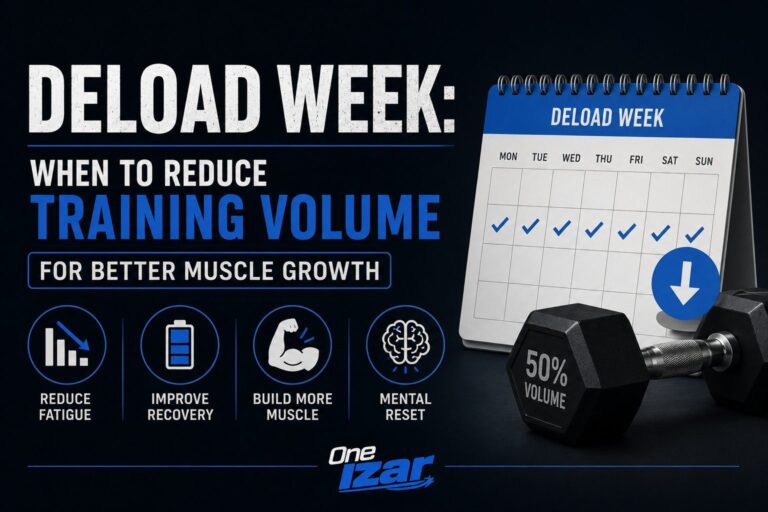
Training creates the stimulus, but recovery determines whether the body can adapt. Poor sleep, high stress, and insufficient rest can reduce performance, increase fatigue, and impair consistency. For recomposition, recovery is not optional. It is part of the system. If accumulated fatigue is undermining your training quality, see our deload week guide.
- Sleep: Aim for 7-9 hours per night to support recovery and hormonal regulation.
- Rest Days: Use rest days to reduce accumulated fatigue and maintain training quality.
- Stress Control: Chronic stress can interfere with appetite, sleep, and training performance.
- Consistency: Track progress over 8-12 weeks, not over a few days.
💡 The Recomp Reality
Most people do not fail body recomposition because it is impossible. They fail because they violate one or more of the conditions required for it: controlled calories, progressive training, enough protein, and proper recovery.
Final Thoughts
Body recomposition works best when the goal is not rapid weight loss, but controlled fat reduction with muscle preservation or growth. A small deficit, progressive resistance training, high protein intake, and adequate recovery create the physiological environment needed for meaningful change.
If your current plan is not working, the problem is usually not the concept of recomposition itself. The problem is the execution.
Measure What Actually Matters
Track the two things that catch mistakes 1, 2, and 4 above
As an Amazon Associate, Oneizar may earn from qualifying purchases at no extra cost to you.
Ready to put these principles into practice? Use our Macro Calculator and Meal Planner to calculate your targets, build your meals, and create a personalized nutrition strategy.