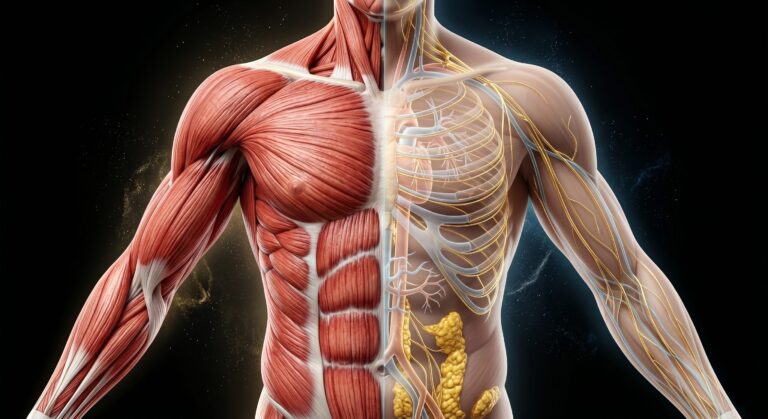

To design efficient, evidence-based training frameworks for body recomposition, one must understand the underlying physiological triggers of skeletal muscle hypertrophy. Muscle growth is not an accidental byproduct of lifting weights; it is a highly regulated adaptive cellular response to specific mechanical and metabolic stimuli. For the specific structural subtype of this process, see our guide on myofibrillar hypertrophy.
1. The Primary Triggers of Skeletal Muscle Growth
Modern exercise science isolates two primary mechanical and chemical pathways that dictate skeletal muscle remodeling: Mechanical Tension and Metabolic Stress. While older fitness literature frequently cited exercise-induced muscle damage (DOMS) as an independent third pillar, recent micro-biological research confirms that damage is a subset of tension pathways rather than a requirement for growthKrzysztofik et al..
A. Mechanical Tension (The Core Driver)
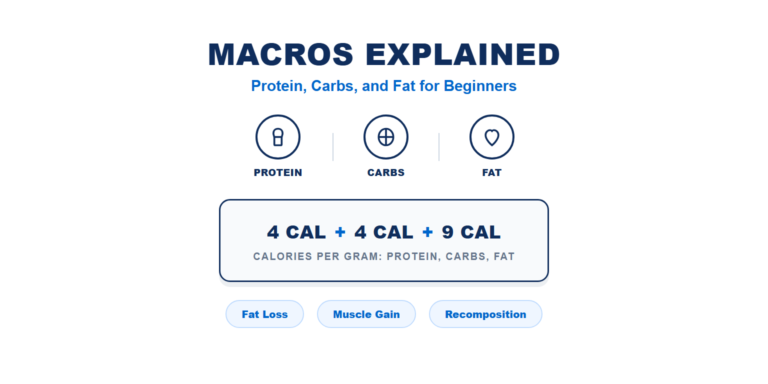
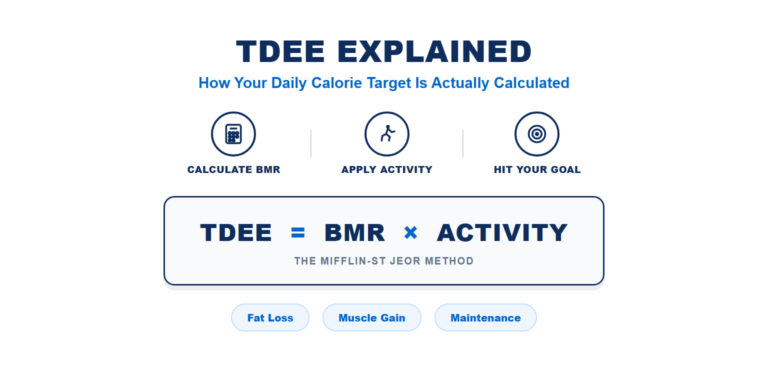
Mechanical tension occurs when a muscle fiber experiences a stretching force while actively producing force. This force is sensed by mechanoreceptors embedded in the muscle cell membrane known as costameres. These mechanoreceptors convert the physical pull into chemical growth cascades via a process known as mechanotransduction. Mechanotransduction upregulates the mTORC1 pathway, which directly dictates the rate of myofibrillar protein synthesis — a process that also depends heavily on adequate dietary protein. See how much protein you actually need to build muscle, and set your daily protein and calorie targets with Oneizar’s free macro calculator.
B. Metabolic Stress
Metabolic stress accumulates during anaerobic glycolysis, typically caused by working within moderate-to-high repetition ranges with restricted rest periods. This training environment traps blood inside the working muscle (the pump), causing localized hypoxia, an accumulation of hydrogen ions, inorganic phosphate, and lactate. This shifts the cellular environment to accelerate voluntary motor unit recruitment and trigger massive cell swelling, signaling cellular reinforcement.
2. Optimizing Training Volume: How Many Sets for Peak Growth?
Volume is universally recognized as the primary dose-response variable for hypertrophy. However, the curve is not linear; it follows an inverted U-shape. Finding the peak of this curve is crucial to prevent entering a state of non-functional overreaching or “junk volume” — the same fatigue-management principle covered in our deload week guide.
According to comprehensive dose-response meta-analyses led by modern exercise scientists, there is a clear threshold system for weekly set allocation per target muscle groupSchoenfeld et al.:
| Weekly Volume Status | Sets Per Muscle Group / Week | Physiological Outcome & Efficiency |
|---|---|---|
| Maintenance / Low Volume | 1-4 Sets | Sufficient to maintain current cross-sectional area; perfect for detraining or active recovery phases. |
| Minimum Effective Volume (MEV) | 5-9 Sets | Measurable growth over baseline in novice to intermediate subjects. High time-efficiency. |
| Optimal Hypertrophy Zone (MAV) | 10-20 Sets | Maximum fractional synthetic rate of myofibrillar protein. Peak growth window for advanced individuals. |
| Diminishing Returns / Overreaching | 22+ Sets | Systemic recovery capacity is exceeded. “Junk volume” occurs, downregulating immune response. |
💡 Real-World Application: Understanding Your Weekly Volume
A very common mistake is reading this chart and thinking: “Great, I will perform 16 working sets for my chest in tonight’s workout!” Do not do this. The numbers in this table represent your TOTAL WEEKLY SETS, not volume per single training session.
Let’s say your chest routine consists of 4 different exercises done for 4 sets each. That is a total of 16 sets (4 × 4 = 16).
- The Sub-Optimal Way: Doing all 16 sets in a single workout. After the first 8-10 sets, your target muscle and nervous system become heavily fatigued. The remaining 6-8 sets are performed with significantly less weight and poor energy, turning into completely wasted effort—often referred to as “junk volume.”
- The Scientific Way (The Top Variant): Split those 16 sets across 2 separate days in the same week. For example, you perform 2 exercises (8 sets) on Monday, and the remaining 2 exercises (8 sets) on Thursday. By doing this, you perform every single set with maximum strength, optimal weight, and fresh energy, keeping you firmly inside the Optimal Hypertrophy Zone (MAV) with 0% wasted volume.
The Hard Cap Rule: Per-Session Allocation
Research demonstrates that the muscle cell can only process a finite amount of anabolic signaling in a single workout. The effective limit per training session is capped at roughly 8-10 working sets per muscle group. Any sets performed past this threshold in a single workout turn into junk volume. To reach a target of 16 weekly sets efficiently, the volume MUST be split across multiple days (e.g., a training frequency of 2x per week).
3. Proximity to Failure and Intensity
For a set to actually trigger muscle growth (a “stimulative set”), it must push your muscle fibers to their limit. Your body is highly efficient and will only recruit its largest, most growth-prone muscle fibers—known as high-threshold motor units—when it absolutely has to. According to the Henneman Size Principle, this only happens when lifting heavy loads, or when taking lighter loads very close to muscular failure.
To track this intensity, exercise scientists use the RIR (Reps in Reserve) system. To force your muscles to grow, your working sets should end with an RIR of 1 to 3. This simply means you should stop your set when you feel like you could only grind out 1 to 3 more repetitions with good form before completely failingPlotkin et al.. This is the same progression logic covered in our progressive overload guide.
4. Actionable Protocol for Muscle Building and Recomposition
- Weekly Target: Program 12-20 working sets per major muscle group per week, split evenly across 2-3 distinct training sessions.
- Intensity Window: Train predominantly in the 6-12 repetition range using a load that forces an RIR of 1-2. Save absolute failure (RIR 0) for the final set of an exercise block.
- Rest Periods: Standardize rest intervals to 2-3 minutes for multi-joint compound movements (e.g., Squats, Rows) to maximize neural recovery and subsequent tension output.
Track Your Volume and Rest Periods
Tools to manage weekly sets, RIR, and rest intervals precisely
As an Amazon Associate, Oneizar may earn from qualifying purchases at no extra cost to you.