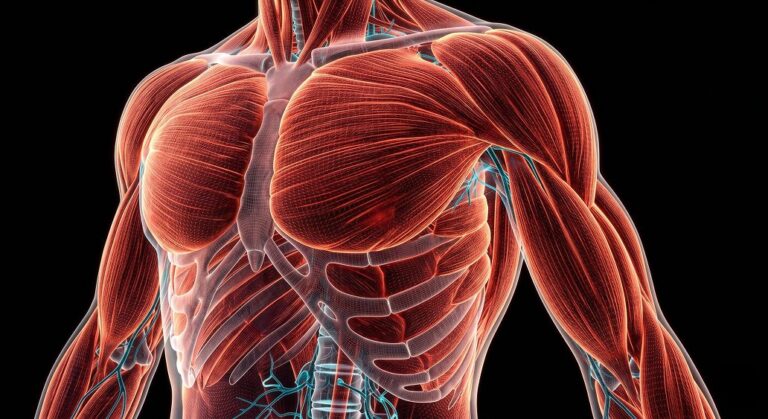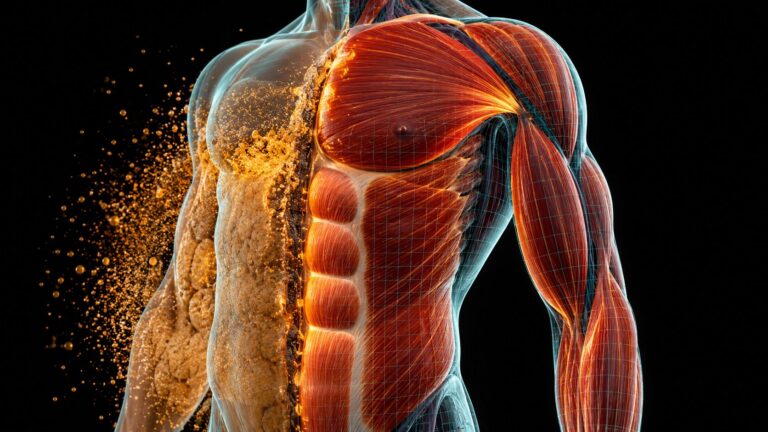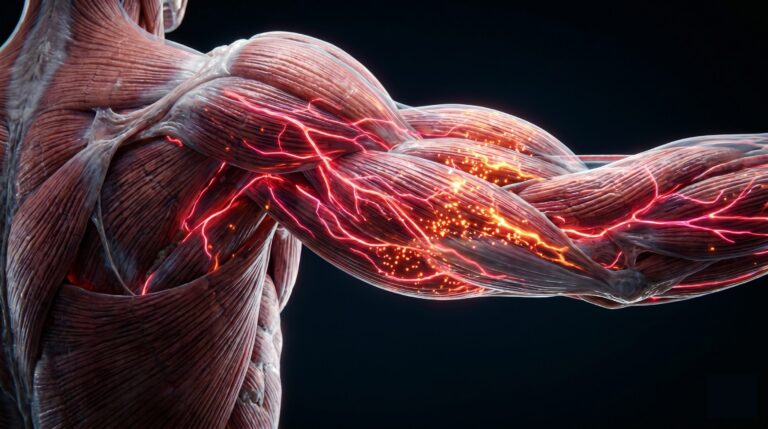

When tracking muscle growth, most lifters evaluate progress solely by the absolute size increases seen in the mirror. However, at a cellular level, not all muscle hypertrophy is structurally identical. Muscle hypertrophy is divided into two distinct biological adaptations: increasing fluid volume or building actual, dense protein structures.
1. Myofibrillar vs. Sarcoplasmic Hypertrophy
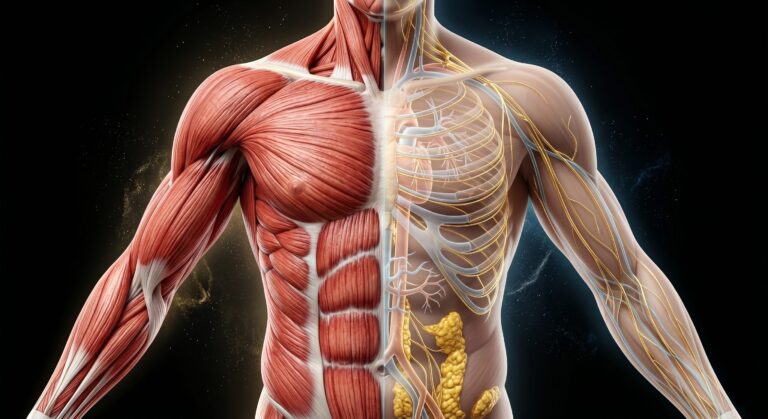
A muscle fiber is essentially a bundle of structural machinery floating in a reservoir of fluid. To force a muscle to grow, resistance training must target either the machinery or the reservoir.
The first pathway is Sarcoplasmic Hypertrophy. This adaptation increases the volume of fluid, glycogen, and non-contractile proteins inside the cell. While this expands the visual size of the muscle (the typical “pump” look), it does not significantly increase physical force generation. The second, more permanent pathway is Myofibrillar Hypertrophy. This process constructs actual, physical protein strands inside the muscle fiber, resulting in real structural density and massive strength gainsSchoenfeld.
2. The Force Formula: Triggering Myofibrillar Realignment
To trigger myofibrillar growth, the muscle cell must experience high levels of mechanical tension. High-volume, low-load pump training (e.g., sets of 15-20 reps to failure) primarily stimulates sarcoplasmic expansion. To force the body to build new structural protein strands, you must lift heavy enough loads to recruit high-threshold motor units. This is the same principle behind progressive overload.
Biomedical data confirms that lifting within an intensity zone of 75% to 85% of your One-Rep Max (1RM) represents the absolute sweet spot for mechanical tension signaling. This load triggers transcription factors that command the cellular nuclei to synthesize new actin and myosin filamentsFry.
3. The Structural Comparison Matrix
Understanding how different training styles stimulate specific cellular compartments allows you to strategically design your programming based on true functional outcomes.
| Hypertrophy Type | Primary Cellular Target | Optimal Rep Range | Primary Training Outcome |
|---|---|---|---|
| Myofibrillar (Structural) | Myofibrils (Actin & Myosin protein filaments) | 3 – 6 Reps @ 80-85% 1RM | Increases true muscle density, dense muscle architecture, and raw absolute strength capability. Permanent structural tissue. |
| Sarcoplasmic (Fluid) | Sarcoplasm (Intracellular fluid & glycogen stores) | 10 – 15+ Reps @ 60-70% 1RM | Maximizes transient visual fullness and cellular hydration. Increases local muscular endurance but has minimal impact on maximum force production. |
💡 The Synergy of Both Adaptations
While myofibrillar hypertrophy builds the core structural foundation of dense muscle tissue, a well-rounded athlete should not completely abandon sarcoplasmic training. An increase in sarcoplasmic fluid expands the cell’s storage capacity for glycogen and hydration, which improves your threshold for volume and performance. For maximum overall development, base 70% of your training cycle around high-tension myofibrillar blocks, and use the remaining 30% for targeted metabolic-stress volume.
4. Programming for Density: Practical Execution
To optimize true structural muscle density and avoid building empty, volatile fluid volume, organize your compound lifts using these parametersWeisgarber et al.:
- Prioritize Compound Kinetics: Focus your high-tension work on multi-joint movements (Squats, Weighted Pull-ups, Bench Press, Overhead Press) where neuromuscular recruitment is highest.
- Manage Rest Profiles: Because heavy mechanical tension places heavy demands on the central nervous system and ATP-CP energy pathways, restrict your rest periods to a minimum of 3 to 5 minutes between heavy sets. Cutting rest short forces the body into a metabolic-stress state rather than a pure tension state.
- Control the Eccentric Phase: Never drop the weight under the influence of gravity. Micro-tears in the myofibrillar matrix occur primarily during a controlled, high-tension eccentric (lowering) phase lasting 2-3 seconds. Give your body enough time to fully recover between heavy blocks — see our deload week guide for managing accumulated fatigue from this style of training.
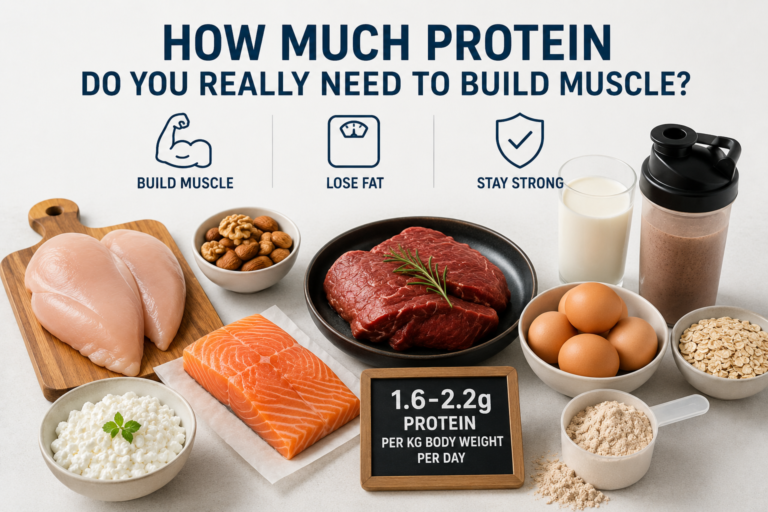
Since this training style also places elevated protein-synthesis demands on the body, pair it with adequate intake — see how much protein you actually need to build muscle, and dial in your daily calorie and protein targets with Oneizar’s free macro calculator.
Gear for Heavy, High-Tension Training
Equipment suited to lifting in the 75-85% 1RM range
As an Amazon Associate, Oneizar may earn from qualifying purchases at no extra cost to you.