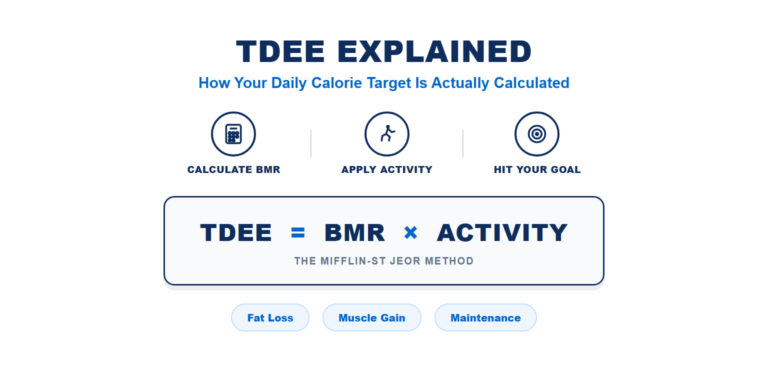

If you’ve used Oneizar’s macro calculator and gotten back three numbers — protein, carbs, and fat — but weren’t totally sure what to do with them, this article is for you. Once you know your TDEE and calorie target, the next question is how those calories should be split. That split is what “macros” means, and understanding it makes the difference between a number on a screen and a plan you can actually follow.
1. What Are Macros, Really?
“Macros” is short for macronutrients — the three categories of nutrients that provide your body with energy: protein, carbohydrates, and fat. Every food you eat is some combination of these three (plus water, fiber, and micronutrients like vitamins and minerals, which provide little or no calories themselves). Each gram of macronutrient provides a fixed amount of energy.
This is why fat-heavy foods are more calorie-dense than protein or carb-heavy foods of the same weight — fat simply packs more than twice the energy per gram. Tracking “macros” instead of just calories means paying attention to where your calories come from, not just how many there are.
2. Protein: The Building Block
Protein’s main job is supplying amino acids — the raw material your body uses to repair and build muscle tissue, produce enzymes and hormones, and support your immune system. It’s the macro most directly tied to muscle retention and growth, which is why it gets the most attention in fitness content.
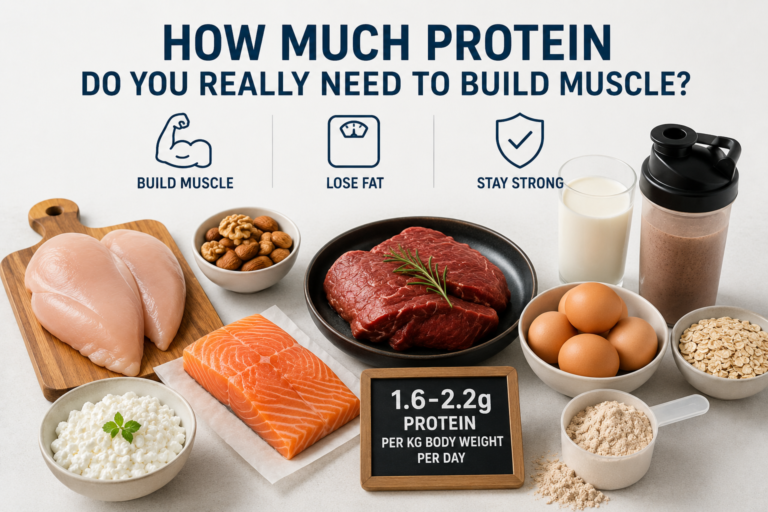
For active adults, research-backed intake ranges from 1.4 to 2.0 g per kg of body weight per day, with the higher end of that range benefiting people specifically training for muscle growth or in a calorie deficit trying to preserve muscle Jäger et al.. This tracks closely with earlier research on athletes’ protein needs, which found that intakes above roughly 1.6 g/kg produce diminishing returns for most people — more protein isn’t harmful, but it stops adding meaningful benefit past that point for the average trainee Phillips & Van Loon.
Good Protein Sources
Chicken breast, lean beef, fish, eggs, Greek yogurt, cottage cheese, tofu, lentils, and whey or plant-based protein powder. For exact gram targets by body weight and goal, see How Much Protein Do You Need to Build Muscle?
3. Carbohydrates: Your Primary Fuel
Carbohydrates are your body’s preferred energy source, especially for the brain and for higher-intensity exercise. They get broken down into glucose, which either fuels activity immediately or gets stored in muscles and the liver as glycogen for later use.
The idea that carbs are inherently “bad” or fattening is one of the most persistent myths in nutrition — weight gain comes from a sustained calorie surplus, regardless of which macro those extra calories come from. For people training regularly, adequate carbohydrate intake is specifically linked to better training performance and recovery, since depleted glycogen stores make workouts feel harder and progress stall Burke et al..
Good carb sources: rice, oats, potatoes, fruit, whole-grain bread, quinoa, and legumes. Carb needs vary more than protein or fat needs depending on activity level — someone training six days a week genuinely needs more carbohydrate than someone who is mostly sedentary, even at the same calorie target.
4. Fat: Essential, Not Optional
Fat is necessary for hormone production (including testosterone and estrogen), absorption of fat-soluble vitamins (A, D, E, K), and cell membrane health. Chronically very-low-fat diets have been linked to hormonal disruption, which is part of why extreme fat restriction is not a sustainable long-term strategy.
General guidance from dietary reference intake standards places fat at roughly 20-35% of total daily calories for most adults, with most of that coming from unsaturated sources Institute of Medicine. Going meaningfully below that range for extended periods is where the health downsides tend to show up — this isn’t a macro to minimize as much as possible.
Good fat sources: olive oil, avocado, nuts, seeds, fatty fish (salmon, sardines), and eggs.
5. How Oneizar Splits Your Macros
Once Oneizar’s calculator determines your calorie target from your TDEE and goal, it allocates that total across the three macros in this order of priority:
| Order | Macro | Why It’s Set at This Step |
|---|---|---|
| 1st | Protein | Narrowest evidence-based range; most direct impact on muscle retention. |
| 2nd | Fat | Set to support hormone health without needing to be higher. |
| 3rd | Carbohydrates | Fills the remaining calories — the most flexible of the three. |
This is why two people with the same calorie target but different activity levels can end up with different carb numbers even if their protein target is identical — the carbs are doing the job of filling whatever room is left.
6. Common Macro Mistakes
Treating all three macros as equally flexible. Protein has the tightest evidence-based range; carbs and fat have more room to shift based on personal preference without meaningfully changing your results, as long as you land within the general ranges above.
Cutting Fat Too Aggressively
A common instinct when a calorie target feels tight is to slash fat to “save room” for carbs or protein. Pushing fat much below the 20% range risks the hormonal issues mentioned above for no real benefit — it’s better to moderate carbs slightly instead.
Ignoring macros entirely and only tracking calories. Two diets with the same calorie total but very different macro splits can produce different results for muscle retention and hunger levels. Calories determine whether you gain, lose, or maintain weight; macros influence what that weight change is made of and how sustainable the process feels.
7. How the Split Shifts by Goal
The general priority order (protein first, fat second, carbs fill the rest) holds across all goals, but the exact numbers shift depending on what you’re trying to achieve:
| Goal | What Changes |
|---|---|
| Fat Loss | Protein moves toward the higher end (up to 2.0-2.2 g/kg) to protect muscle while calories are restricted. |
| Muscle Gain | Protein stays in the same effective range; the calorie surplus gives more room to carbs specifically to support training volume. |
| Body Recomposition | Protein set high like fat loss, but calories stay near maintenance — the tightest balancing act of the three. See How to Recomp. |
8. Putting It Into Practice
You don’t need to hit your macro numbers exactly every single day. Landing within 5-10 grams of each target most days is enough to see the intended results — chasing perfect precision usually costs more effort than it’s worth. Oneizar’s food database and daily macro tracker are built for exactly this: add foods as you eat them, and the tracker shows you in real time how close you are to your targets, so you can adjust your next meal instead of guessing.
Get Within 5-10 Grams Without Guessing
The two tools that make hitting your macro split realistic day to day
As an Amazon Associate, Oneizar may earn from qualifying purchases at no extra cost to you.
Actionable Summary
- Macros = protein, carbs, and fat: protein and carbs provide 4 calories/gram; fat provides 9 calories/gram.
- Protein: 1.4-2.0 g/kg body weight/day for active adults, higher end for muscle growth or dieting.
- Carbs: your primary training fuel — needs scale with activity level, not a fixed number.
- Fat: keep to roughly 20-35% of total calories; don’t cut it aggressively to make room for other macros.
- Oneizar sets protein first, fat second, and fills the rest with carbs. For more science-based guidance, visit our fitness articles library.
Frequently Asked Questions
No. Being within 5-10 grams of each target most days is enough to see real results. Consistency over weeks matters far more than precision on any single day.
Protein, since it has the narrowest evidence-based range and the most direct link to muscle retention, especially during a calorie deficit.
Yes — as long as your protein and fat targets are met and your total calories match your goal, you can shift carbohydrate intake lower and increase fat to compensate.
Oneizar sets protein and fat first, then fills the remaining calories with carbs. A higher activity level increases your calorie target, and most of that extra room goes to carbs.