
Calorie Cycling for Body Recomposition
Most people approach body recomposition with a single flat calorie number, eaten identically every day of the week. But your body doesn’t need the same energy on a heavy training day as it does on a rest day — and matching your intake to that reality, a strategy known as calorie cycling, can make a small deficit far easier to sustain without falling into the common mistakes that stall progress.
1. The Physiological Case for Cycling Calories
On a training day, your body is doing measurably more work: depleting muscle glycogen, generating micro-damage that needs repairing, and running an elevated metabolic rate for hours afterward through EPOC. A rest day carries none of that extra demand. Eating identically on both days means you’re either underfueling your hardest sessions or overfeeding your easiest ones.
2. What the Research on Intermittent Restriction Shows
While few studies test calorie cycling day-to-day specifically, the closest and most relevant research is on intermittent energy restriction — cycling between deficit and maintenance over longer blocks. A controlled trial by Byrne and colleagues found that participants who cycled 2 weeks of dieting with 2 weeks at maintenance lost more fat over the full protocol than a group in a continuous, uninterrupted deficit of the same average sizeByrne et al.. The proposed mechanism is the same one that makes calorie cycling attractive day-to-day: periodic higher-calorie periods appear to blunt the metabolic slowdown that comes with sustained restrictionTrexler et al..
3. A Practical Training-Day / Rest-Day Split
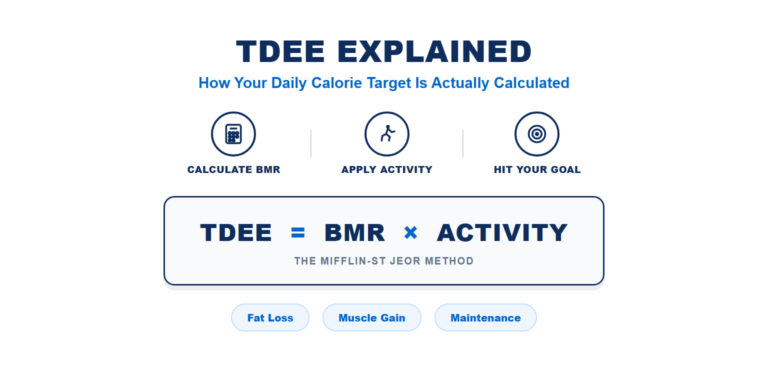
The goal of calorie cycling isn’t to eat more overall — your weekly average deficit stays exactly the same as it would on a flat protocol. You’re simply moving calories from rest days to training days. Start from your maintenance number in the TDEE and calorie basics guide, or get it instantly with the free macro calculator.
| Day Type | Calorie Target | Carb Adjustment |
|---|---|---|
| Heavy Training Day | At or slightly above maintenance TDEE | Higher — refill glycogen used in the session |
| Light Training Day | ~5-10% below maintenance TDEE | Moderate |
| Rest Day | ~15-20% below maintenance TDEE | Lowest — glycogen demand is minimal |
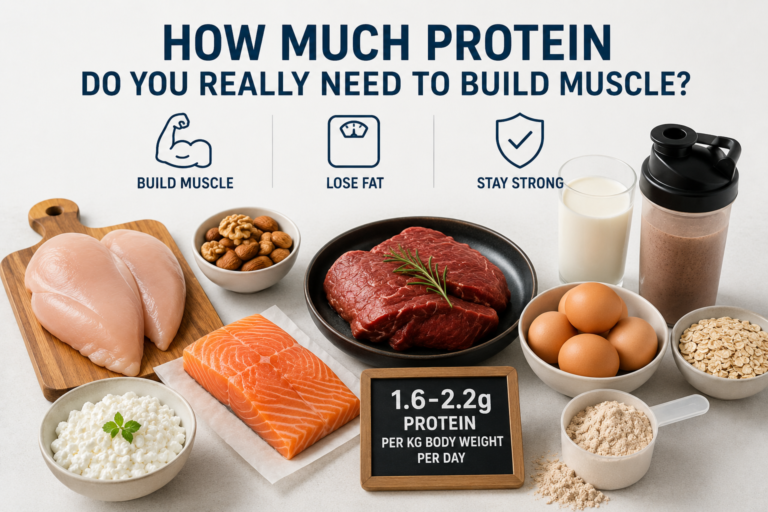
Protein stays constant across every single day, regardless of training status — this is non-negotiable for recomposition. See how much protein you actually need to build muscle for your daily target. Only carbohydrate and, to a lesser extent, fat intake shift up or down between training and rest days.
💡 Why This Beats a Flat Deficit for Most People
Calorie cycling doesn’t burn more fat than an equivalent flat deficit on a weekly basis — the math is identical. Its real advantage is adherence and training performance. Higher calories on your hardest training days mean better strength output and less perceived fatigue during the session that matters most, while the lower rest-day calories are easier to tolerate because you’re not also trying to train hard on them. Better session performance means better progressive overload over time — which is the actual driver of the muscle side of recomposition.
4. Who Should (and Shouldn’t) Bother With This
- Good fit: Anyone training 3+ days per week with a clear split between hard training days and rest days
- Good fit: People who find a flat deficit makes their heaviest training sessions feel flat or underpowered
- Not necessary: Beginners still adapting to consistent nutrition — a flat, simple deficit is easier to track and just as effective at this stage
- Not necessary: Anyone training at a similar intensity every session, where there’s no real “hard day vs. easy day” distinction to build the cycle around
Pair your training days with meals that lean higher-carb — try the Korean Ground Beef Rice Bowl or Honey Garlic Chicken Rice Bowl — and save lighter, lower-carb options like the Baked Cod for rest days.
Gear for Managing Two Different Daily Targets
Cycling calories means portioning accurately on both training and rest days
As an Amazon Associate, Oneizar may earn from qualifying purchases at no extra cost to you.